
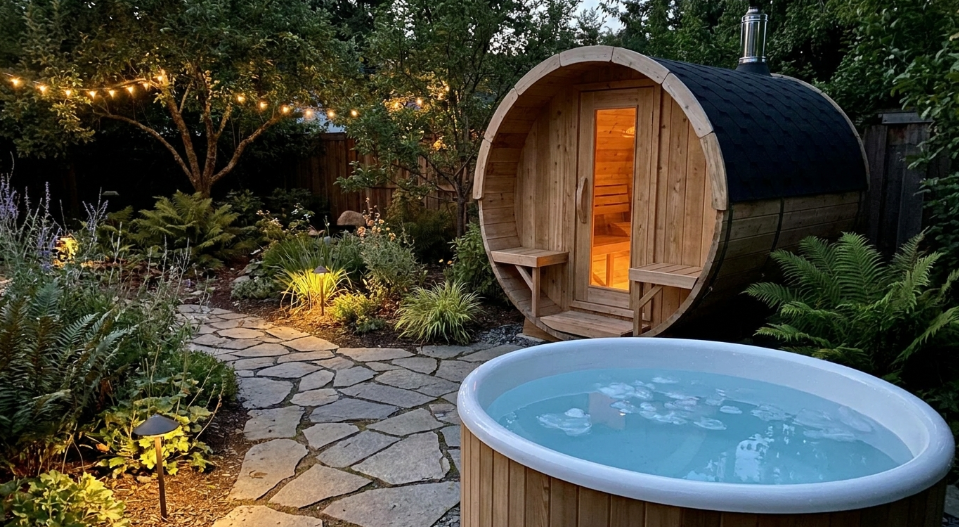
A DIY panel kit typically saves $1,500 to $4,000 in labor compared with a full professional installation, but it puts panel assembly, leveling, and often electrical prep on the buyer’s own schedule and skill level. Professional installation costs more upfront but includes proper leveling, sealed panel joints, and, in most cases, licensed electrical work that keeps the manufacturer’s warranty intact. The right choice comes down to hands-on experience, available time, and whether the site needs any real prep work before the sauna itself goes in.
What a DIY Kit Actually Includes
Most DIY sauna kits ship as pre-cut wall, roof, and floor panels with tongue-and-groove joints, along with the heater, hardware, and a printed or digital assembly guide. Panels are numbered to match a diagram, and the actual joinery is designed to go together without power tools beyond a drill and a rubber mallet in most cases. What a kit does not include is a pad or foundation, which has to be prepared separately before assembly starts, and in almost every case it does not include the electrical circuit the heater needs to run.
What Professional Installation Actually Adds
A professional crew brings the parts most DIYers underestimate: precise leveling before the first panel goes up, correctly sealed joints so the room holds heat and humidity the way it is designed to, and, for most jobs, coordination with a licensed electrician for the heater circuit. Installers who work with a given brand regularly also catch small assembly issues, a slightly misaligned panel or an under-tightened joint, before they turn into a bigger problem months later. That experience is the main thing being paid for, more than the physical labor of lifting panels into place.
Where DIY Saves the Most Money
The savings are almost entirely in labor. A two- to four-person barrel or cabin kit that a crew would charge $800 to $2,000 to assemble can be built by an owner and a helper over a weekend for the cost of a few tools not already in the garage. That gap grows on larger cabins, where full-service installation, including a foundation and electrical work, commonly runs $2,500 to $6,000 above the sauna’s own price. For a buyer comfortable with basic carpentry and willing to spend a weekend on it, that is real money kept in pocket.
Where DIY Costs Extra Time, or Turns Into Mistakes
The panels themselves are usually not the hard part. Leveling the base correctly before assembly starts is where first-time installers lose the most time, since even a small slope compounds across several panel courses and can leave a door that will not close cleanly. Sealing joints properly the first time also matters more than it seems, since a gap that looks fine at installation can let heat and moisture escape once the room is in regular use. Both problems are fixable after the fact, but fixing them after the sauna is fully assembled costs more time than doing them right the first time would have.
Electrical Work: the Part Most DIYers Get Wrong
This is the one area where the DIY versus professional decision should not really be a cost question. Most full-size sauna heaters need a dedicated 240-volt circuit sized to the heater’s exact amperage, and running that circuit is licensed electrician work in nearly every jurisdiction. Undersized wiring on a sauna heater is a real fire risk, not a theoretical one, and most manufacturers will not honor a heater warranty if the unit was wired outside its listed specification. Even a buyer assembling the panels themselves should plan to have a licensed electrician handle the circuit, panel-kit sizes and included hardware vary by maker, and shoppers who want to compare stated assembly time and what is included before deciding can see the full lineup to check what each kit covers before ordering tools or scheduling a weekend.
Does Installation Quality Affect the Research-Backed Case for Owning One?
The health research behind regular sauna use assumes a room that works consistently and gets used several times a week over years, which a review in Mayo Clinic Proceedings and a systematic review of dry sauna bathing both draw their associations from. A sauna with a poorly sealed joint that lets heat escape, or a heater running on undersized wiring that trips breakers, is much less likely to get used that consistently. Installation quality is not a health factor on its own, but it is a practical precondition for the kind of routine use the research is actually built around.
Who Should Just Hire It Out?
Anyone without basic carpentry experience, without a helper for the heavier panel sections, or without the time to spend a full weekend or two on the project is a better fit for professional installation, even at the higher cost. A steeply sloped or uneven site, a long electrical run from the panel, or a location with tight access for delivery all tilt the math further toward hiring it out, since those conditions are exactly where inexperienced installers run into the most trouble. For a straightforward flat site and a buyer with some hands-on experience, a DIY kit remains the more budget-friendly path.
A Middle Ground: DIY Assembly With a Hired Electrician
Plenty of buyers land somewhere between the two extremes, handling the panel assembly themselves while still hiring out the one part with real safety and warranty stakes. This split keeps most of the labor savings from a DIY kit while removing the single biggest source of risk, undersized or improperly installed wiring, from the owner’s plate. It also tends to be the more realistic plan for someone with decent hands-on skills but no electrical license, rather than trying to save on every part of the job at once.
Frequently Asked Questions
Can one person assemble a sauna kit alone? A small barrel is sometimes manageable solo, but most kits are built for two people since panels are heavy and awkward to align without help.
How much does professional installation cost? Assembly labor alone often runs $800 to $2,000. A full turnkey install with electrical and a base commonly lands between $2,500 and $6,000 above the sauna’s price.
Is DIY assembly hard to get wrong? Panel assembly itself is usually straightforward. Leveling the base, sealing joints, and electrical work are the parts most likely to go wrong.
Should electrical work always go to a licensed electrician? Yes. Undersized wiring is a real fire risk, and most manufacturers will not honor a warranty on improperly wired heaters.
References
- Clinical Effects of Regular Dry Sauna Bathing: A Systematic Review, Evidence-Based Complementary and Alternative Medicine, 2018.
- Benefits and risks of sauna bathing, The American Journal of Medicine, 2001.
- Effects of heat and cold on health, with special reference to Finnish sauna bathing, American Journal of Physiology – Regulatory, Integrative and Comparative Physiology, 2018.
